


Certificate Template Wording That Sounds Official
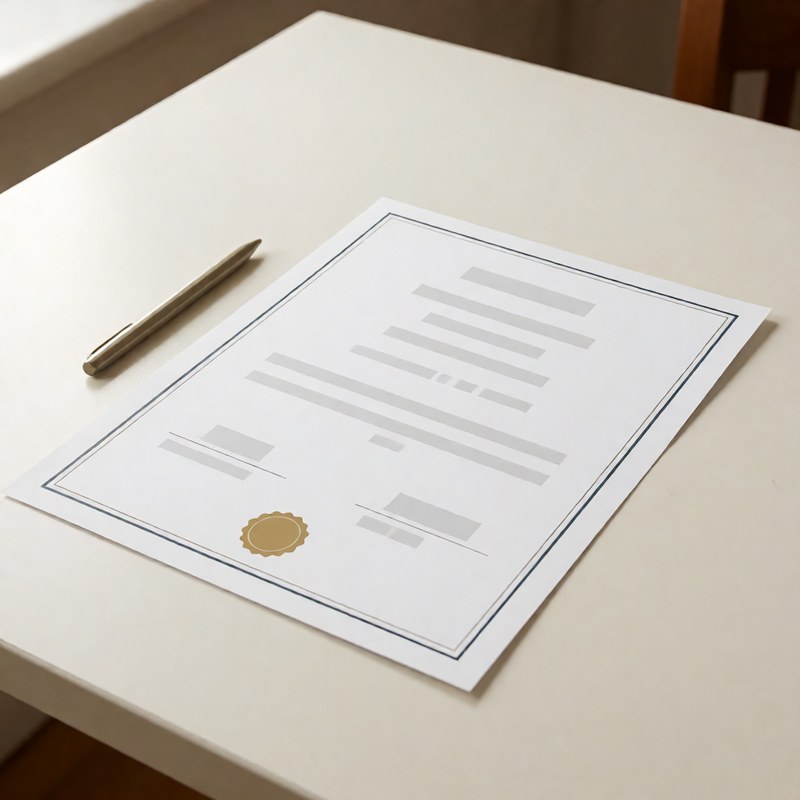
A certificate looks official because of its layout, but it reads as official because of its wording. The wrong line turns an award into a souvenir. The right one takes thirty seconds to write.
The three lines that matter
Almost every certificate carries three pieces of text: who receives it, what it is for, and who signed it. If those three are clear, the rest is decoration.
Most templates overcrowd these. Strip the extras before you add anything.
Naming the recipient
Use the full name as the person writes it. Avoid "Mr" and "Ms" unless the certificate is formal by convention. If the name is long, reduce the font size rather than the name.
For a group certificate, name the group, then list members on a second line in smaller type.
Stating the achievement
Name the achievement, not the effort. "Completed the 2026 Data Foundations Programme" is a fact. "For outstanding effort" is a judgement that belongs in a letter, not a certificate.
If the achievement has a level or a grade, include it. If it does not, do not invent one.
The date
Use one date format consistently. Spell out the month for international audiences, because 03/04 means different days in different countries.
Put the date near the signature, not under the title.
The signature block
A signature needs a name and a role under it. A signature alone is a mark, not a credential.
Words to avoid
Avoid "best", "outstanding" and "excellent" unless there is a defined ranking behind them. Avoid filler like "in recognition of" when "for" does the same job.
Two working examples
Course completion: "This certifies that [Name] has completed the [Course] programme on [Date]."
Participation: "Awarded to [Name] for participation in the [Event] held on [Date]."
Both are plain, both are true, and both survive being printed, scanned and forwarded.
Check before printing
Read the whole certificate aloud. If a sentence sounds like a greeting card, rewrite it. If it sounds like a record, it is ready.