


Digital Planner vs Paper Planner: How to Actually Choose
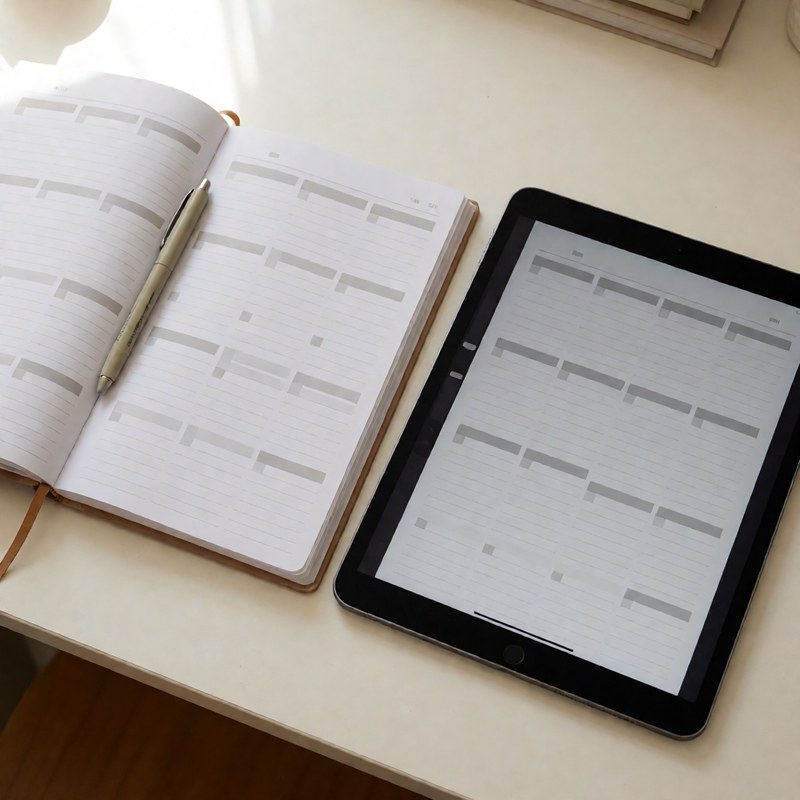
Planner advice usually turns into a personality test. In practice the choice comes down to three things: where you already work, how you search for information, and whether you need the plan to be visible when you are not looking at a screen.
Where the plan actually lives
A digital planner lives where your email and calendar already are. That is an advantage if your day is screen-based, and a disadvantage if the plan disappears the moment you close the laptop.
A paper planner stays open on the desk. It is visible without unlocking anything.
Searching versus browsing
Digital wins on retrieval. If you need to find what you wrote three months ago, a search field does it in a second.
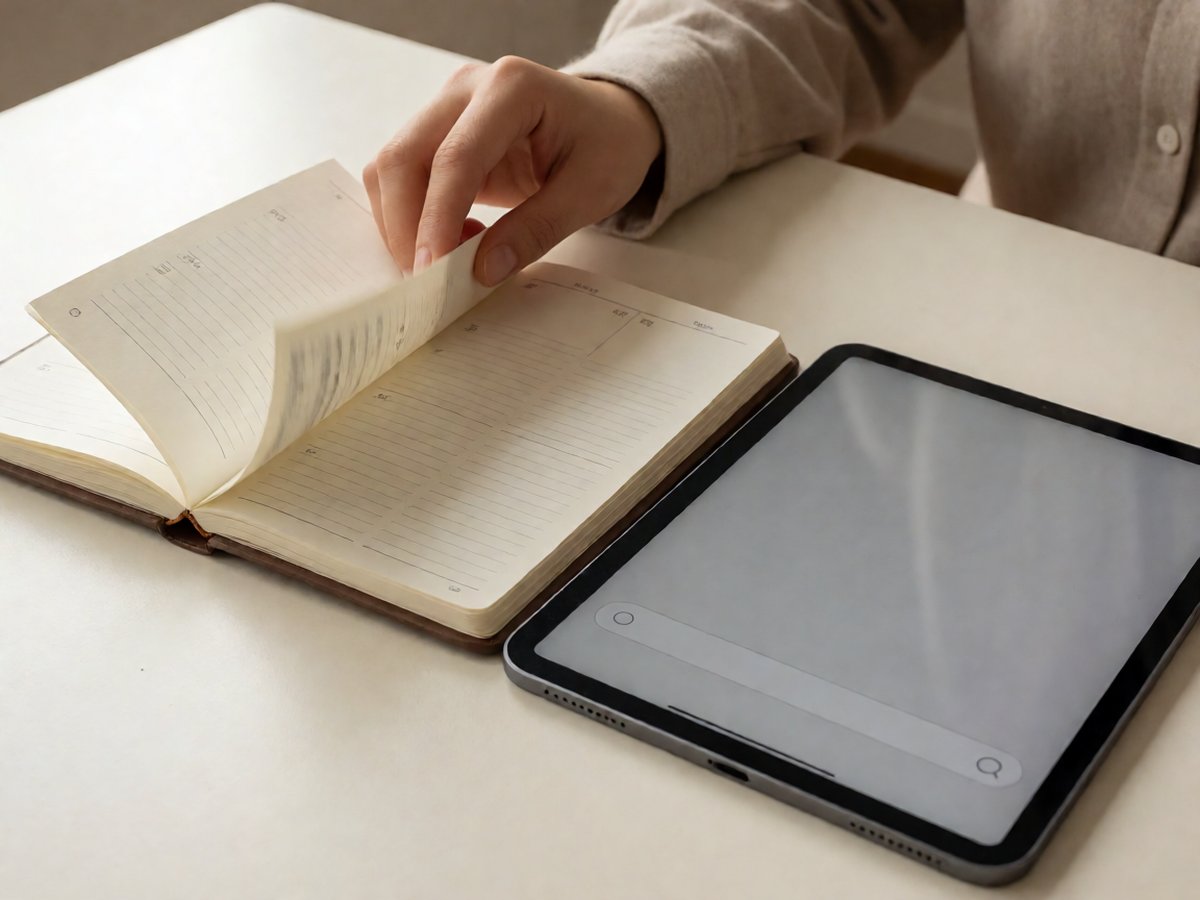
Paper wins on browsing. Flipping back through a month is faster than opening three apps, and accidental discovery is part of how planning works.
Writing by hand
Handwriting slows you down in a useful way. A task you write by hand is harder to add carelessly, which tends to produce a shorter, more honest list.
Typing is faster, which is better for capture and worse for filtering.
Carrying it
A paper planner is one object with no battery. A digital planner is available on every device, including the one in your pocket.
If you move between home, office and travel, that availability matters more than the weight of a notebook.
Sharing and backup
Digital plans are easy to share and hard to lose. Paper plans are private by default and can be lost in a bag.
If the plan involves other people, digital is the practical choice.
The hybrid that actually works
Many people keep a paper page for the day and a digital calendar for commitments. The paper holds the intention; the calendar holds the obligations.
That split works because it matches how each format is strong.
How to decide in one minute
If your work is on a screen all day and you need to search old notes, choose digital. If your work is physical and the plan needs to stay in sight, choose paper.
If you cannot decide, start with paper for one month. It is cheaper to abandon than a subscription.